FIFA president Gianni Infantino abandoned a plan to bring private investors into the commercial business surrounding the World Cup on July 31, 2026, after opposition spread across football’s governing structure. In a statement issued late that Friday, Infantino said the proposal would not move forward, acknowledging that the project had become divisive.
The plan would have placed FIFA’s commercial operations for its men’s and women’s World Cups and Club World Cups into a subsidiary valued at $20 billion. Private investors would have owned 20 percent. FIFA had identified as its anchor investor a New York investment firm created by Joshua Kushner, the younger brother of Jared Kushner.
Resistance included UEFA, Concacaf and the Asian Football Confederation. UEFA’s 55 member associations had agreed the previous day to boycott the World Cup and other FIFA competitions if the proposal continued. That threat placed immediate pressure on the organisation because the next FIFA event, the Women’s Under-20 World Cup in Poland, was due to begin on September 5.
The dispute also produced unusually public criticism from senior figures inside FIFA. Carlos Cordeiro resigned as an adviser to Infantino in protest. Cordeiro, a former Goldman Sachs banker who represented FIFA on the White House Task Force for the World Cup, argued that a share in the competition should not be sold and urged other officials to express their views.
FIFA chief operating officer Kevin Lamour separately said staff had been misled by the limited openness surrounding months of planning. He characterised the initiative as belonging to one individual and called on football’s political leadership to confront the questions raised by it. The interventions added an internal governance challenge to the opposition already coming from regional confederations.
In withdrawing the proposal, Infantino said he had considered the views put forward and concluded that the divisions no longer served its original purpose. He said he intended to reconvene interested parties and pursue the shared goal of growing football, especially in countries needing support. The announcement ended the immediate prospect of the private-equity structure but left the criticism of FIFA’s decision-making unresolved.
The reversal also created political uncertainty for Infantino. He was elected FIFA president in 2016 after serving as UEFA’s general secretary and then returned unopposed in 2019 and 2023. FIFA statutes permitted him to seek one further four-year term. The deadline for the next presidential contest was November 18, four months before the scheduled vote in Rabat, Morocco.
By stopping the project, Infantino removed the trigger for the threatened European boycott. The episode nevertheless demonstrated how quickly resistance from member associations and senior administrators could constrain a major commercial restructuring of FIFA’s leading competitions.
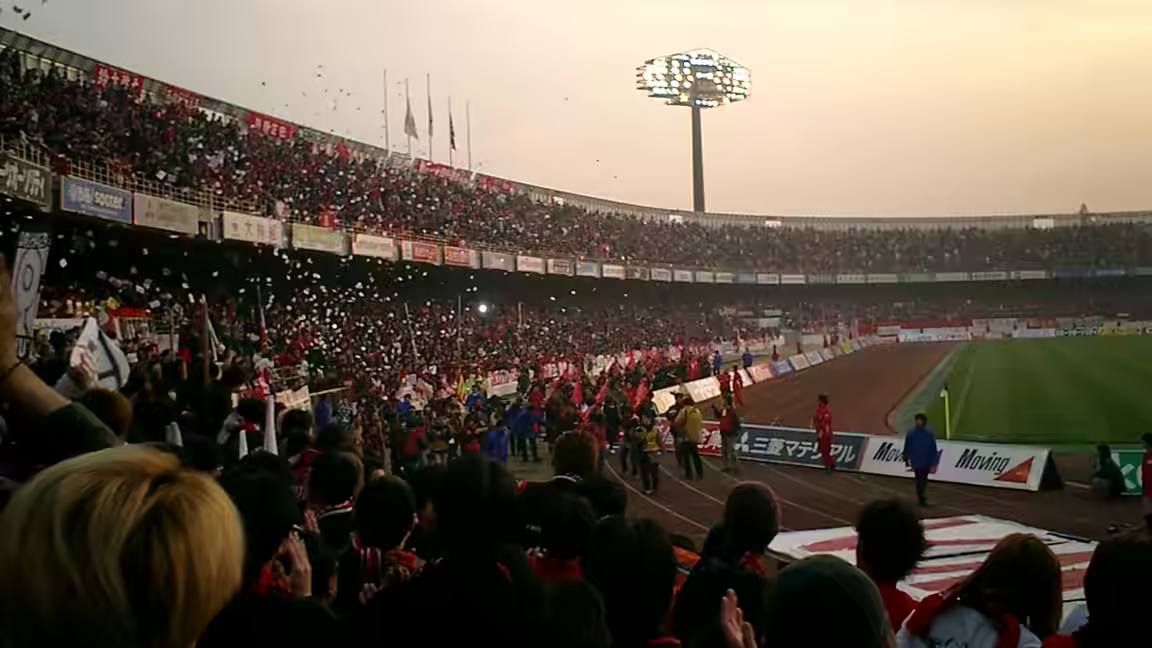
![Rizal Memorial Coliseum [1] The Rizal Memorial Coliseum is one of two indoor sporting arenas located inside the Rizal Memorial Sports Complex [2] in Manila, Philippines, the…](/media/articles/commons-f1161067c6b2.avif)