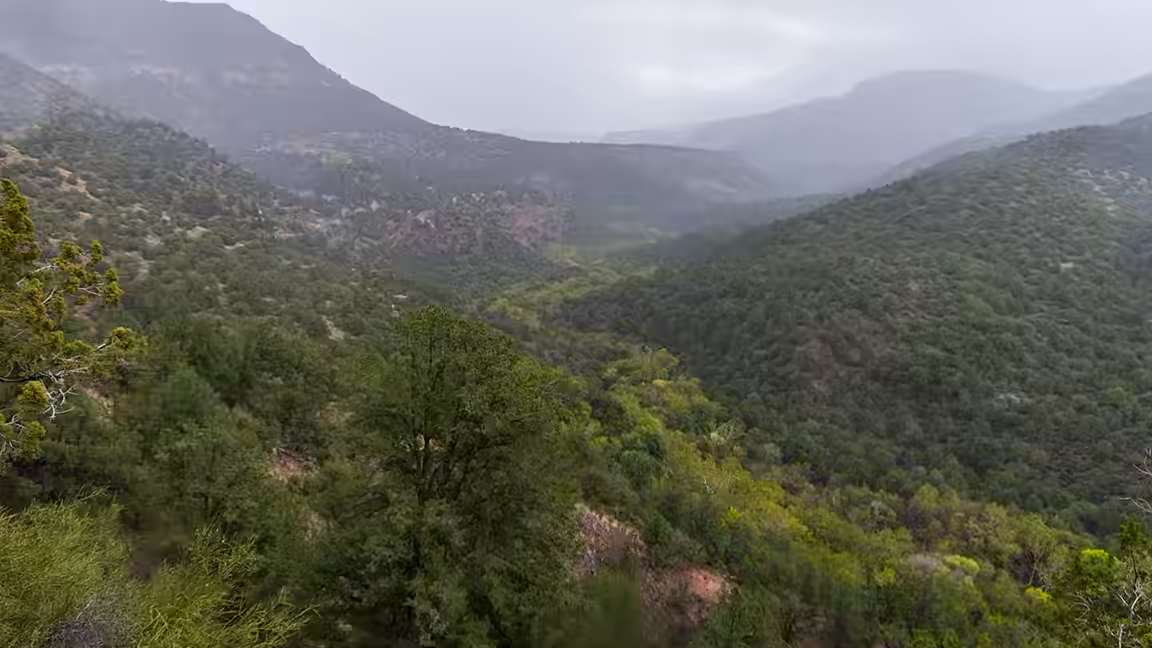
El Salvador and Panama escalated their responses to severe drought on Aug. 25, 2026, as El Niño disrupted rainfall, damaged harvests and intensified concern about food supplies across Central America. Panama declared an emergency, while El Salvador activated its highest nationwide alert for meteorological and agricultural drought.
Panama's Interior Minister Dinoska Montalvo said the emergency declaration was intended to prepare authorities for further effects from El Niño. The country's water shortage had already forced reductions in shipping through the Panama Canal, linking the drought not only to farming losses but also to operations on a major transport route.
El Salvador's Civil Protection department announced the red alert to activate monitoring, surveillance and assistance for affected communities. Rainfall that is normally abundant at that point in the year had failed, wiping out crops. The Agriculture Ministry said it would provide food support to rural families without irrigation systems.
The dry conditions extended beyond the two countries. Honduras had placed 80 per cent of its territory on alert. Parts of El Salvador, Honduras and Nicaragua lie within the Central American Dry Corridor, a drought-prone zone with high exposure to extreme weather. The combination of poor rainfall and unusual heat increased fears of hunger in vulnerable communities.
All three countries set monthly temperature records in June and July. El Salvador recorded another 14 temperature records during August by the time of the report. Those readings compounded the stress on crops and water supplies already associated with the drought.
El Niño involves unusually warm surface waters in the central and eastern equatorial Pacific, which alter atmospheric circulation and rainfall patterns around the world. The pattern occurs on average every two to seven years. The 2026 episode was developing into the strongest in recent years, according to the supplied reporting, and was also contributing to higher global temperatures in a year forecast to be the hottest on record.
Other countries in the region were also preparing for disruption. Peru had declared an emergency in one third of its cities a week earlier, warning that heat and rain linked to El Niño could damage food production. The hazards were not identical everywhere: Central American governments were responding to drought, while Peru was also preparing for heavy rainfall.
The declarations in El Salvador and Panama were preventive and operational measures, not evidence that the drought's effects had peaked. They gave authorities frameworks to monitor conditions, support communities and prepare for further losses.
As of the date, the immediate priorities were protecting rural households, limiting agricultural harm and managing scarce water. The outlook remained uncertain, but crop failures, record heat and reduced canal traffic showed that the regional weather pattern was already carrying human and economic consequences.