A chartered Cessna 441 crashed near western Alaska's remote Cape Newenham radar installation on August 20, killing all eight people aboard during an attempted landing in poor visibility. The flight was carrying two pilots, two U.S. Army Corps of Engineers employees and four contractors to the remote site, according to the reporting provided. By the time search teams reached the wreckage, there were no survivors.
Investigators said the aircraft lost contact after a second approach to the airstrip. Federal officials described the plane as operating under instrument meteorological conditions, meaning the crew was relying on cockpit instruments rather than a visual view of the ground. Reporting from the AP adds that the first landing attempt had to be abandoned because visibility was insufficient. The second approach ended with the aircraft going down roughly a third of a mile from the runway in terrain that leaves little room for error.
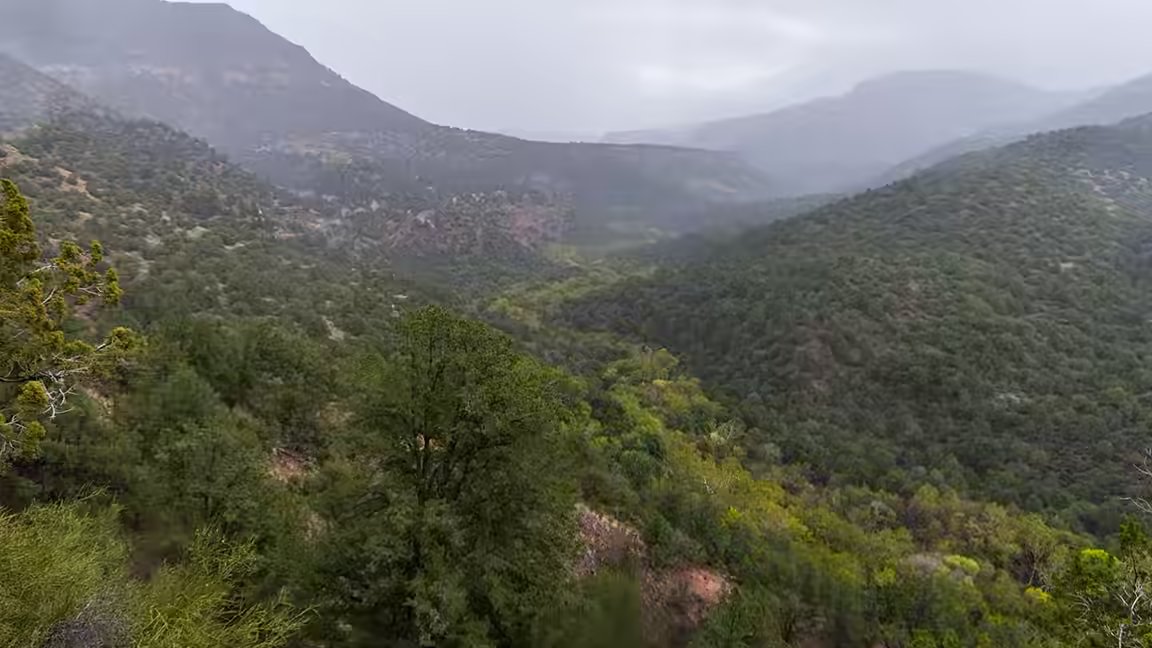
Weather appears central to the early picture, though not yet to any formal conclusion about cause. An observation point near the airport reportedly showed a low ceiling and fog before the crash, with visibility deteriorating sharply in a short period. That matters at Cape Newenham because the isolated strip is surrounded by challenging terrain and serves a remote radar installation rather than a conventional commercial destination. In such settings, a narrow change in weather can quickly turn an already demanding arrival into a critical situation.
The site itself helps explain why the flight was there and why the crash drew military attention. Cape Newenham is part of a radar network used to monitor aircraft activity in Alaska’s airspace and along approaches tied to Russia, North Korea and China. The Army Corps said its personnel were traveling in support of a U.S. Air Force project team, though the precise assignment was not detailed. Military and rescue units responded alongside the NTSB, FAA, Alaska State Troopers and the state rescue coordination system.
For now, authorities have been careful not to speculate beyond the known sequence: the aircraft departed Anchorage in the morning, made repeated efforts to land at the remote strip, then went down near the runway area and caught fire after impact. The FAA and NTSB opened the investigation, with the NTSB leading updates.
The tragedy also serves as a reminder of how unforgiving aviation in remote Alaska can be. Flights that support infrastructure and defense missions often depend on small aircraft, isolated airfields and rapidly shifting weather. In that environment, even experienced crews can face conditions that narrow the margin for recovery within minutes.