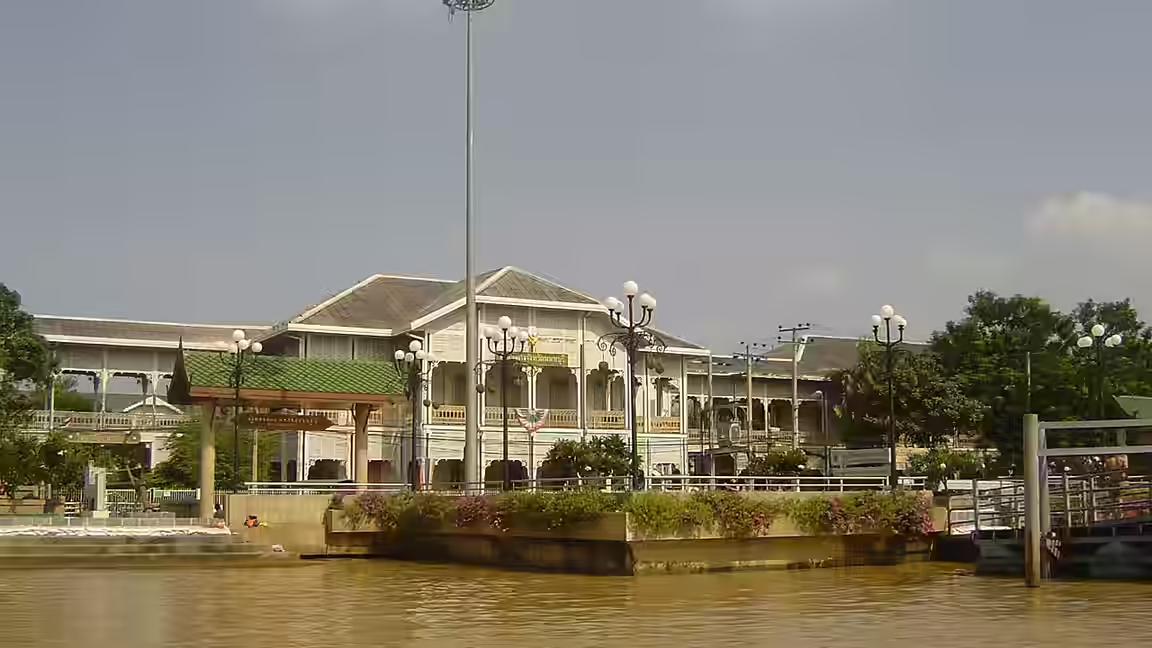
Thongchai Yenprasert, president of the Nonthaburi Provincial Administrative Organization, died after being shot at a local government complex outside Bangkok on August 10. His driver was also wounded and underwent surgery.
Police detained former member of parliament Chalong Riewrang, whom the BBC transliterated as Chalong Reawraeng. Chalong acknowledged firing the weapon during a livestreamed telephone call with political commentator Anchalee Paireerak and later spoke to reporters from the police station. The shooting remained an alleged criminal act subject to investigation and legal proceedings.
Thongchai, 71, was hit several times, including in the neck, and lost substantial blood, hospital director Dr Sakol Sookprome said. He died at Phra Nang Klao Hospital later that afternoon. His driver was struck in the right arm and hand; police described the driver’s condition as not critical after surgery.
Police describe personal money dispute
Regional police said the apparent motive was a long-running disagreement over borrowed money involving several million baht. Chalong told police and reporters that he had gone to confront Thongchai, whom he considered a friend, because he wanted money returned and Thongchai would not discuss the matter. Those details were the suspect’s account and had not been tested in court.
Chalong also claimed that Thongchai’s driver pointed a gun at him, causing him to fire. Police said a firearm was found in Thongchai’s vehicle but had not been discharged, while closed-circuit footage showed only Chalong firing from close range. Investigators described him as the sole shooter.
The BBC reported that Chalong telephoned Anchalee while her YouTube programme was live. During the call, he said the shooting followed a financial disagreement, and she urged him to remain where he was, put down his gun and wait for police. His statements provided evidence that he admitted firing, but not an independent account of why he did so.
The supplied evidence does not support the discovery note’s assertion that Chalong was detained over corruption. Authorities took him into custody over the fatal shooting, while police characterised the underlying dispute as personal and financial. Prime Minister Anutin Charnvirakul said the case would be pursued without exception, regardless of the suspect’s former political position.
Prominent local official
Thongchai was a former police colonel and a prominent political figure in Nonthaburi. He joined the police in 1984 and led the provincial administrative organisation for more than two decades. In 2020, he won a fourth term after facing an electoral challenge from Chalong, according to Thai PBS reporting cited by the BBC.
The shooting occurred only days after a separate deadly attack at a school in the same province. The supplied BBC and AFP-based reports carried different casualty totals for that earlier event, so this article does not repeat a number. Both accounts agree that it intensified public concern about firearms before Thongchai was killed.
Anutin had ordered tighter enforcement against carrying guns in public, including police checkpoints and stronger controls on firearm possession, carriage and use. He said only officials on duty were permitted to carry guns publicly under current rules and rejected self-defence as a general justification.
A 2017 Small Arms Survey estimate put civilian firearm possession in Thailand at 10.3 million weapons, or about 15 per 100 residents—the highest rate in Southeast Asia by a wide margin. AFP’s report said experts had identified gaps including the absence of mental-health screening for applicants and no periodic reassessment of licence holders.
Thongchai’s death placed another prominent shooting into that national debate. The supported evidence points to one gunman and an apparent private dispute, while leaving the suspect’s legal responsibility and the full sequence of the confrontation for investigators and the courts to determine.