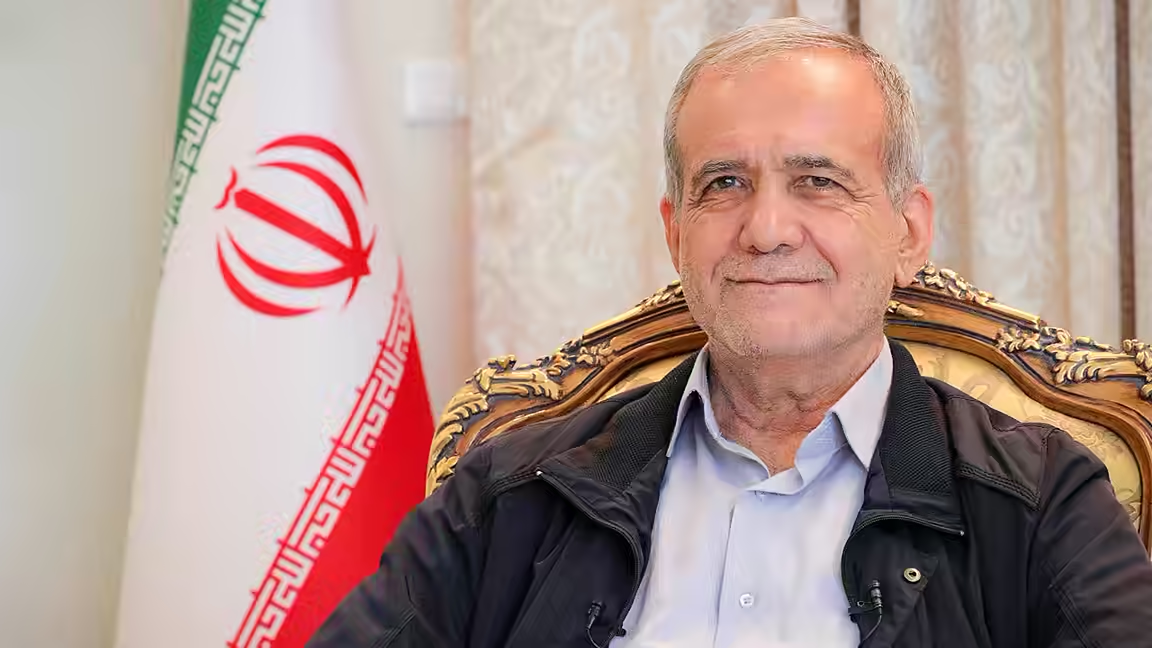
A publicly reported meeting between Iran's Supreme Leader Mojtaba Khamenei and President Masoud Pezeshkian on August 9 drew unusual attention because the new leader had remained largely out of view since succeeding his father, according to the two source packets supplied for this draft.
Shafaq said the meeting was presented as Khamenei's first publicly reported session with Pezeshkian since he took over the country's top leadership role. The report said the discussion took place as Pezeshkian entered his presidency's third year and covered domestic pressures, military matters, budget management, the energy sector and economic cooperation with foreign partners.
Those agenda items matter because they suggest the encounter was framed not as a symbolic courtesy call but as a working discussion touching core state functions. Even so, the reporting available here is limited to outside summaries of state-linked coverage, which means the article cannot go beyond the topics explicitly described in the evidence packet.
The other important element was visibility itself. Shafaq said Khamenei's public footprint since taking office had mainly consisted of written statements carried by official channels, with no recent photos, audio or video circulating publicly. Middle East Monitor, citing Anadolu and semi-official Iranian media, said a rare video of Khamenei was then released after reports had questioned his health. Taken together, the two reports point to a tightly managed pattern of public appearances rather than a routine political communications strategy.
That helps explain why even a single reported meeting became newsworthy. In systems where leadership is highly personalized and access is tightly controlled, the appearance or absence of a supreme leader can itself become a signal read for clues about political stability, succession and decision-making. The supplied evidence does not independently confirm the health speculation described by Middle East Monitor, but it does show that such speculation formed part of the context in which the video and meeting report were received.
The packet also indicates that Pezeshkian had previously acknowledged difficulty in communicating with Khamenei, which added to attention around the disclosure. Still, the available record does not establish a broader change in governing style or a sustained return to public appearances. It supports only a more careful conclusion.
Based on the evidence here, Iranian state-linked reporting disclosed a meeting between Mojtaba Khamenei and Pezeshkian and a rare video of the supreme leader around the same period. The significance lies less in any announced policy shift than in the fact that these were among the few publicly visible signs of the new leader's activity after months of limited exposure.