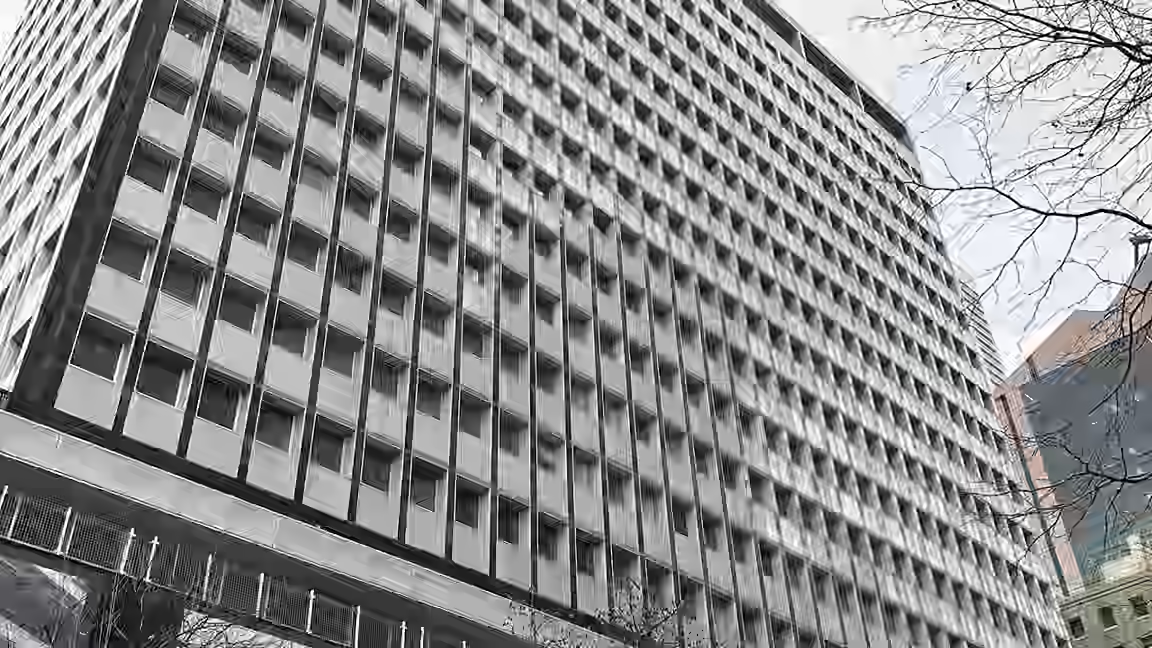
The Intergovernmental Authority on Development, or IGAD, moved to reopen its mission headquarters in Khartoum on July 30, marking a notable institutional return to Sudan’s capital during a prolonged civil war that has reshaped the country’s political and economic landscape. The step did not signal an end to the conflict, but it did indicate that the East African regional bloc was prepared to resume at least part of its on-the-ground work in Sudan.
According to Sudan Horizon, IGAD Executive Secretary Workneh Gebeyehu was due to inaugurate the mission headquarters in the Al-Riyadh district of Khartoum during an official visit that also included meetings with senior Sudanese officials. The outlet reported that diplomats and media representatives were expected at the ceremony, underscoring the political symbolism attached to the reopening.
IGAD framed the move as a reaffirmation of its commitment to Sudan and its population rather than as a declaration that conditions had normalized. That distinction matters. Sudan’s war, which began in April 2023, has disrupted state administration, regional diplomacy, trade routes and humanitarian coordination. In that context, the reopening of a mission office is better understood as a practical and diplomatic foothold than as evidence of broad recovery.
A reopened headquarters can serve several functions at once. For a regional organization, having staff on the ground can make routine contact with ministries, diplomats and aid actors easier than trying to coordinate entirely from outside the country. It can also improve the pace of information-sharing and give the bloc a clearer sense of political developments in the capital, especially when formal negotiations or emergency coordination efforts require quick communication.
The organization’s stated priorities, as reported ahead of the event, were to support peace efforts, improve coordination with regional and international partners and express solidarity with Sudanese civilians. Those aims fit IGAD’s established role as a sub-regional body that tries to convene governments and maintain channels for political dialogue during crises, even when its leverage over events on the ground is limited.
There are also broader business and governance implications to a restored diplomatic presence. Regional bodies often help frame discussions around cross-border trade, transport links and stabilization priorities, even when they are not direct economic policymakers. Reopening the Khartoum mission therefore signals that IGAD wants to remain institutionally present in conversations about Sudan’s recovery path rather than wait for the conflict to end before re-engaging.
Still, the reopening alone does not resolve the deeper question of whether regional mediation can alter the trajectory of the war. The available evidence supports a narrower conclusion: on July 30, IGAD publicly resumed operations for its Sudan mission in Khartoum and presented the move as part of a continuing commitment to peace, coordination and institutional engagement with Sudan despite the conflict.