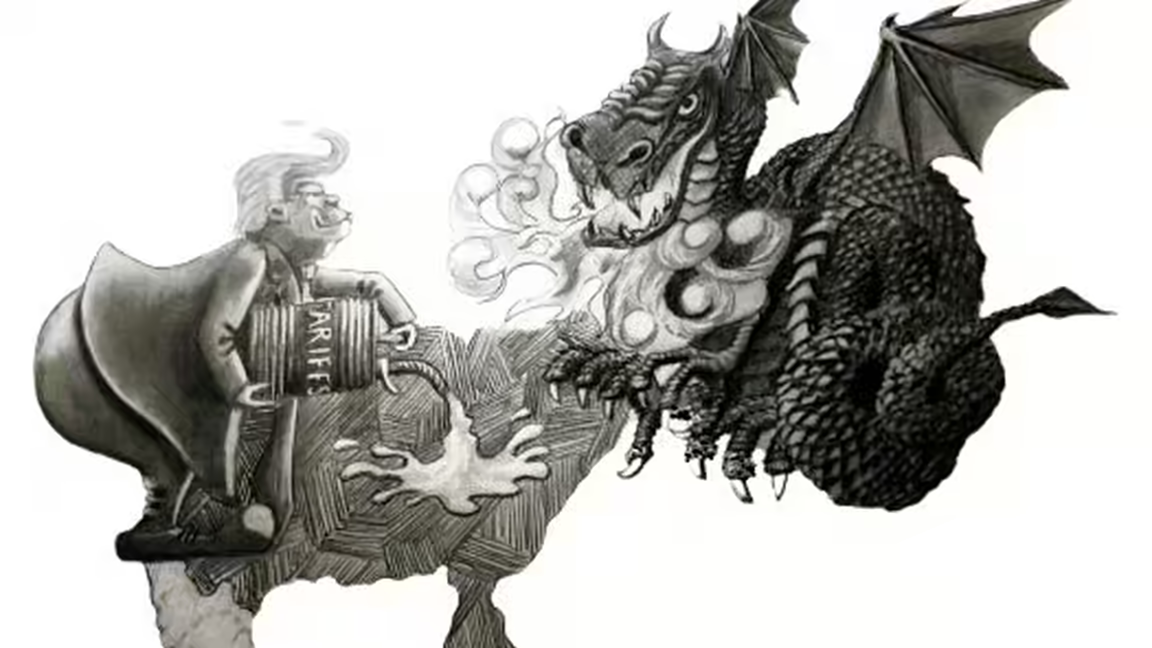
The United States said it would impose new import tariffs on 60 trading partners, presenting the measure as part of a forced-labor enforcement strategy and a replacement for a temporary global duty that was due to expire.
The duties were set at either 10 percent or 12.5 percent, according to the announcement described by AFP via the Philippine Daily Inquirer. They were scheduled to take effect Friday after the event date and were said to apply to major economies including China, India and the European Union. Goods already covered by sector-specific tariffs, such as steel and aluminum, were not included. Products entering under the United States-Mexico-Canada Agreement were also exempt, a U.S. official told reporters.
U.S. Trade Representative Jamieson Greer linked the action to forced-labor standards, saying the United States has enforced a forced-labor import ban for nearly a century and that trading partners should do the same. Under the plan, economies assessed as having introduced a forced-labor prohibition were assigned the lower 10 percent rate. Canada, the European Union and the United Kingdom were identified in that category. Other economies received the higher 12.5 percent rate, with China and Japan among those covered, according to a U.S. official cited in the report.
The action followed a difficult period for President Donald Trump’s tariff agenda. AFP reported that the Supreme Court had struck down a series of duties in February, limiting the administration’s ability to use broad tariffs as it had earlier attempted. After that setback, Trump used other authorities to reimpose a 10 percent tariff, but that measure was temporary and lasted 150 days. The newly announced duties, first proposed in June after a months-long investigation, were designed to take over as that authority expired.
The administration also had separate investigations under way into 16 economies over alleged excess industrial capacity. Those inquiries could lead to additional tariffs and potentially different rates among countries.
Trade specialists quoted by AFP described the move as part of a broader effort to preserve leverage over trading partners while placing the measures on firmer legal footing. Greta Peisch, a former general counsel at the Office of the U.S. Trade Representative and now a partner at Wiley Rein, said the use of investigations could help strengthen the duties if they face court challenges. Ryan Majerus, a former U.S. trade official and partner at King & Spalding, said Section 301 of the Trade Act of 1974, used by Greer for the latest duties, gives officials room to adjust measures after they are imposed.
The announcement came amid other U.S. tariff actions, including a 25 percent tariff on various Brazilian goods and an order for new 50 percent tariffs on many Canadian products. Analysts cited by AFP said those steps underscored that U.S. tariff arrangements remained unsettled even where trade understandings had been reached.