Canada has canceled a planned joint ceremony with the United States for the opening of the Gordie Howe International Bridge after President Donald Trump announced a 50% tariff on most Canadian goods. The decision turns what was meant to be a celebration of cross-border infrastructure into the latest flashpoint in a widening trade dispute.
A spokesperson for Canadian Infrastructure Minister Gregor Robertson said it would be inappropriate to move ahead with a celebratory event between the two countries in light of the U.S. trade action. Canada now plans to hold its own ceremony on Friday, while it remains unclear whether the United States will stage a separate event.
The bridge itself is one of the most important links between the Detroit and Windsor economies. It spans the Detroit River and is expected to become a major artery for trade and travel. Officials had previously reached an agreement this month to open the bridge after earlier delays tied to unresolved issues between the two governments.
The reporting says two U.S. officials still expect the bridge to open to traffic on July 27, although they were less certain than before. That detail suggests the trade dispute has complicated the celebration more than the scheduled launch of the crossing itself. Canada’s spokesperson said the country remained committed to opening the bridge and to marking the milestone with Canadians on July 24.
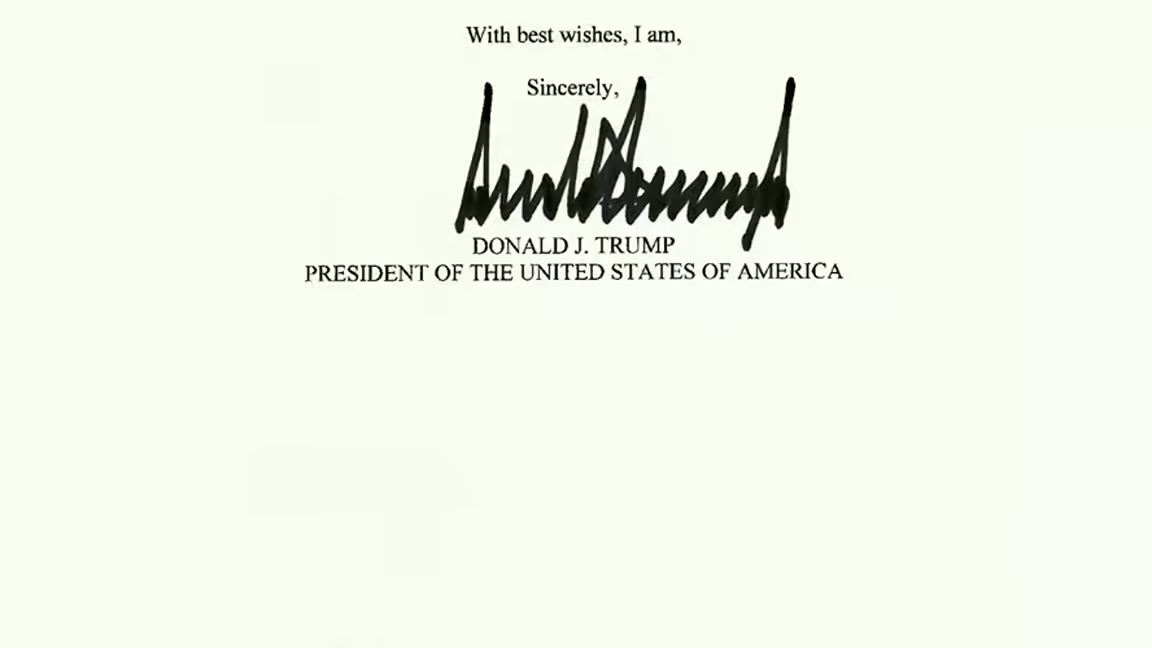
The tariffs announced by Trump were framed by the White House as retaliation for what he described as unfair treatment of U.S. automobiles, alcohol and dairy products. Canadian Prime Minister Mark Carney said his government supports free and fair trade and remains ready to negotiate. Ontario Premier Doug Ford went further, saying Canada should answer tariff for tariff and dollar for dollar if the measures proceed.
The bridge has been under construction since 2018 and cost nearly $4.4 billion. It is named for Canadian hockey great Gordie Howe. The dispute now surrounding its opening underscores how trade tensions can spill into symbolic events as well as broader economic policy.
The bridge project has been repeatedly framed as more than a local infrastructure job because it links two industrial regions that depend heavily on trade flows. A change to the ceremony does not alter that physical fact, but it does show how quickly diplomacy can spill into public symbolism. Even the opening date now carries an added political charge because the two countries are trying to manage a disagreement while still moving a major project forward.
There is also a practical dimension. If the bridge opens on the planned schedule, the two governments can still avoid a deeper disruption to freight and commuting patterns even if the public ceremony remains split. That would let infrastructure proceed while politics stays contentious, a compromise that may be politically awkward but economically useful.